
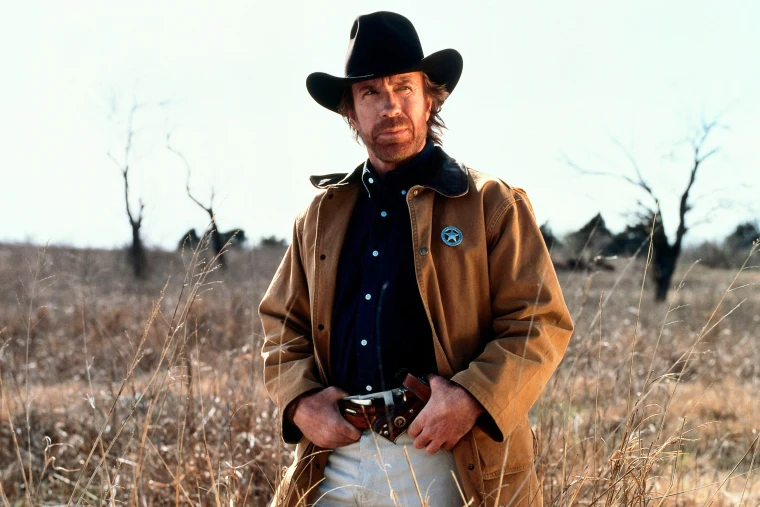
Chuck Norris didn’t lose his last fight. At 86 years old, just days before he passed away, he posted a video of himself boxing. Think about that for a second. Most people are slowing down in their 60s. This guy was still moving, still sharp, still throwing punches in his mid-80s.
And then, just like that, he’s gone.
That’s usually where the story ends for most people. We talk about the legacy, the accomplishments, the career. In Chuck Norris’s case, you could spend hours there. Movies, television, business ventures, a larger-than-life persona that turned into a global brand. A guy who quite literally built something from nothing.
But that’s not the part I care about.
What I care about is what happens next.
Because behind all of that success is something far more familiar than people realize. When you strip away the fame, what you’re left with is something I see every single week in my office. Two marriages. Children from different relationships. A surviving spouse. A family business. Significant assets. And a family structure that, if it’s not handled properly, has the potential to blow up after someone passes away.
This isn’t rare anymore. This is normal. And that’s exactly why this story matters. Chuck Norris didn’t just leave behind a legacy. He left behind an estate that, by most accounts, is worth tens of millions of dollars. Real estate. Business interests. Brand and licensing rights. A ranch that functions as both a home and a business. Ongoing income streams that don’t just shut off when someone dies.
Now layer on top of that the family dynamic. Children from his first marriage. Twins from his second. Stepchildren. And a daughter from a prior relationship that he didn’t meet until later in life, but ultimately acknowledged as his own. That’s not just a family. From an estate planning perspective, that’s a situation that requires precision. Because here’s the part most people don’t want to hear.
Love doesn’t solve this. Good intentions don’t solve this, and “everyone knows what I would want” definitely doesn’t solve this.
Documents do. Structure does. Clear, intentional planning does.
And most people don’t have it. One of the biggest misconceptions I see is this idea that having a will means you’re all set. It doesn’t. A will is not a plan. A will is simply a set of instructions that gets handed to the probate court. It’s public. It can be challenged. It creates a forum for disagreement at exactly the worst possible time.
Now take a family like this – multiple relationships, significant assets, different expectations—and drop it into probate. You’re not getting a smooth transition. You’re getting friction. You’re getting questions. And in many cases, you’re getting litigation. If Chuck Norris were sitting in my office, I wouldn’t be asking him about his career. I’d be asking him about his plan.
Have you clearly addressed each of your children by name?
Have you made it unmistakably clear what each person is supposed to receive?
Have you protected your spouse without unintentionally disinheriting your children from your first marriage?
Who’s in control of the business if something happens to you?
And maybe the most important question of all – what happens if the wrong person ends up in charge?
These are not hypothetical questions. These are the exact pressure points where families either stay together… or fall apart.
I’ve seen it happen too many times.
A plan leaves everything to a surviving spouse, which on the surface feels right. But that spouse may live another 20 or 30 years. During that time, the children from the prior marriage are left waiting. Maybe they trust the situation. Maybe they don’t. Maybe relationships are strong. Maybe they’re not. Over time, things change. People remarry. Priorities shift. Money gets spent. And what started as a simple plan turns into tension, and eventually, conflict. Not because anyone intended for that to happen. But because nobody thought it all the way through. And then there’s the business side of this, which is where things can really unravel.
Chuck Norris didn’t just leave behind assets. He left behind value that needs to be managed. Businesses don’t run themselves. Someone has to make decisions. Someone has to control the direction. Someone has to decide how money is distributed. If that responsibility ends up in the wrong hands, the damage can be immediate. I’ve watched family businesses fall apart not because they weren’t successful, but because there was no clear succession plan. No structure. No clarity on who’s in charge and how decisions get made.
That’s how value gets destroyed. Not overnight, but steadily, piece by piece. And the frustrating part is that all of this is preventable.
A real plan isn’t complicated, but it is intentional. It requires making decisions most people would rather avoid. It requires thinking through relationships, not just assets. It requires acknowledging that families are complex, and that complexity doesn’t disappear just because it’s uncomfortable to talk about. If you have a second marriage, children from a prior relationship, stepchildren you care about, or any meaningful level of assets, this applies to you.
Your estate plan is either intentional, or it’s dangerous. There is no middle ground. Chuck Norris spent his life building something extraordinary. Discipline. Focus. Work ethic. He didn’t leave anything to chance when it came to his career. The question is whether that same level of intention carried over into his estate plan. Because here’s the reality. You can spend your entire life building something. And lose control of what happens to it the moment you’re gone. Not because you didn’t care.
But because you didn’t plan it properly. Most people don’t think about this until it’s too late. They assume things will work themselves out. They tell themselves they’ll deal with it later. But later is exactly when families end up in court. So the real question isn’t what you have. It’s whether you’ve put a plan in place that actually protects it.
At Monteforte Law, that’s what we do. We help families think through the decisions most people avoid, so that when the time comes, things work the way they’re supposed to. If reading this made you pause for even a second and wonder whether your plan is where it should be, that’s a good thing.
That’s your signal.
Reach our to us at 978-657-7437 to schedule a consult call.
Because the goal isn’t just to have a plan.
It’s to have the right one.